Corporate Gifts Buyers Actually Keep
A corporate gift is planned around the desk, the bag or the daily routine, rather than around how impressive it looks on the day it is given.
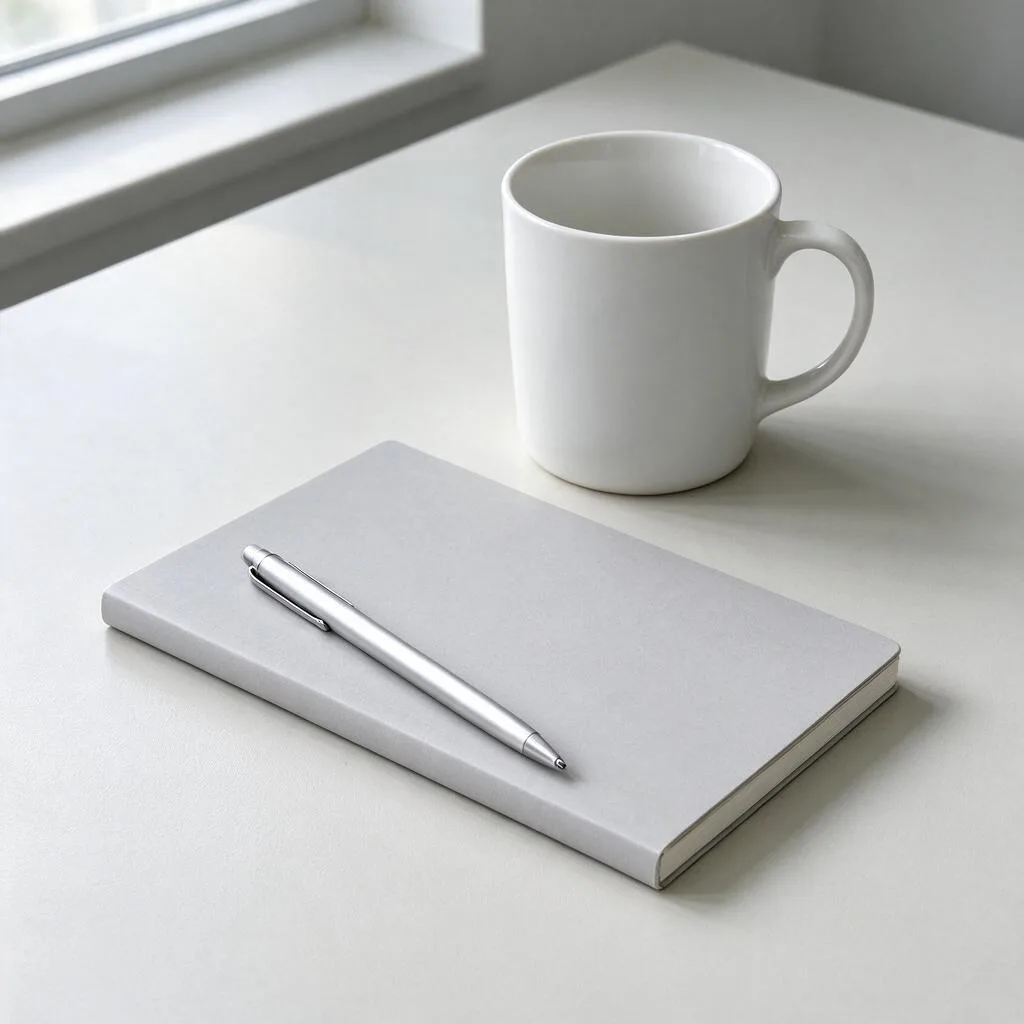
Desk visibility
When planning desk visibility, ask where the gift is planned to sit: a pen, a notebook and a mug are planned for the desk, in plain sight, while a decorative item competes for shelf space that is already full. Buyers choosing a gift can start by asking where the item is planned to live, because the answer points straight to the family.
A desk set works as a group, because a pen beside a notebook and a mug looks like a considered set, while a single item alone can look like an afterthought. Plan the set as one brief, naming each family in turn, so every item is listed together and the set is ordered as a whole rather than as items ordered separately.
Everyday use
The second test for a gift, after desk visibility, is the planned setting: a morning routine, note-taking, or a trip out of the office. Ask which setting the gift is planned for, and let that setting guide the choice: a mug is planned for a morning routine, a pen for note-taking, and a bag for a trip out of the office. Those three items pass the everyday test on their own merits, without any special pleading in the brief.
A gift that needs instructions or a special occasion fails the everyday test, because the buyer must first find a planned setting for it. A pen needs no planned setting, a mug needs no planned setting, and a bag needs no planned setting: each one fits a routine that already exists. Buyers can apply that test to any gift idea by asking whether the item fits a routine the recipient already has.
Paired sets that go together
Paired sets suit gift giving because a set tells a small story: a pen and notebook set says writing, a mug and bag set says travel, and a pen, notebook and mug set says desk. The story matters because a set with a clear theme reads as chosen, while a set of unrelated items reads as assembled from whatever was on hand. Name the theme in the brief, so the set is planned around one idea.
A paired set also simplifies the brief, because one brief can name every item in the set, with a quantity beside each item, and the whole set travels as one order. State the set items by family name, the mark or name to appear on items where wanted, and the delivery date, and the set is fully described in a handful of lines.
Names and marks on gifts
A name on a gift turns a general item into a personal one, because a pen with a name belongs to one person in a way that a plain pen never can. For staff events and team occasions, plan name gifts by listing each recipient beside the pen planned for that person. State the list of names alongside the quantity in the brief, so each pen can be tied to one person without a separate message later.
A mark on a gift serves a different purpose, because a mark ties the gift to a company or a campaign rather than to a person. Mark gifts suit client occasions and campaign events, where the gift carries a message as well as a use. State the mark and the barrel or cover colour together in the brief, so the gift look and the campaign look are planned as one.
Gifts by occasion
Occasion shapes gift choice as surely as desk visibility does, because a client thank-you, a team event and a partner handover each call for a different tone. A client thank-you suits a tidy desk set, a team event suits a practical set for everyday use, and a partner handover suits a single considered item with a formal look. Name the occasion in the brief, so the tone of the gift follows the occasion rather than a guess.
Season and setting add a further layer, because an outdoor event calls for a bottle or an umbrella alongside the desk items, while an indoor meeting calls for a pen and notebook set alone. State the setting in the brief, so the set can include an outdoor item where the occasion is outdoors, and leave it out where the occasion is indoors.
A gift brief that stays short
A gift brief that stays short reads as a list: the occasion, the set items by family name, the mark or name where wanted, the quantity for each item, and the delivery date, with the minimum order quantity and lead time question asked before ordering. Each line in that list answers one question, and together they cover the whole gift order without a second message.
Read the brief once before sending, checking that the occasion, the set items and the delivery date all appear, because those three facts are the ones most often left out of a gift brief. A brief that passes that read is ready to send, and the inquiry form on the contact page follows the same order, so a buyer can move from this guide to the form without rearranging anything.
Gifts that travel
Gifts for travel suit a buyer planning for a recipient who moves between home, office and events. A gift planned for one place serves one place, while a gift planned for travel serves every place on the routine. Plan a bag, a bottle and a compact umbrella for travel, and a desk set for the desk. State the travel need in the brief where the gift must move, so the gift choice follows the routine rather than the desk alone.
A travel gift also suits a visitor set, because a bag with a bottle and a pen covers a day out in one set, and each item in the set is planned for the day itself. Plan the travel set as one brief, naming each family in turn, so the set travels as a whole rather than as items ordered separately.
Related pages
Send an inquiry
Use the inquiry form on the contact page to send the item list, quantities and destination market.